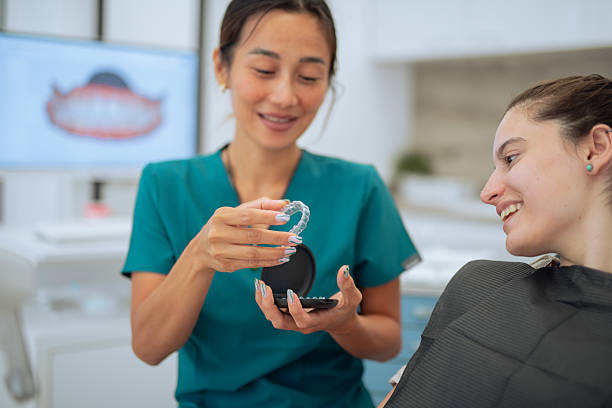
Why Bite Evaluation Matters Before Invisalign Treatment in Vienna, VA
Invisalign planning should start with more than a look at whether your teeth appear straight. Before this orthodontic treatment begins, the dentist needs to see how your upper and lower teeth meet and where pressure falls when you bite down. The evaluation also needs to check whether any bite issues could affect how treatment unfolds. A thorough bite evaluation can identify overbite, underbite, crossbite, open bite, uneven tooth wear, grinding, and jaw-related symptoms before clear aligners are designed.
At SmileWorx in Vienna, VA, Dr. Olga Spivak evaluates tooth alignment and bite function together, not just the visual appearance of crowding or spacing. This approach helps determine whether Invisalign is appropriate for a given case and what tooth movements are needed, and whether additional care may be needed before or alongside treatment.
Why Is Bite Evaluation Important Before Invisalign?
Straight-looking teeth and a healthy bite aren't always the same thing, which is why evaluation comes first.
Invisalign Moves Teeth, So the Bite Must Be Planned First
Moving teeth changes how they meet. If the bite isn't evaluated before treatment starts, Invisalign may straighten teeth visually while missing functional concerns that affect comfort or long-term stability.
Straight Teeth Do Not Always Mean a Healthy Bite
Teeth can look even and well-aligned from the front while the bite underneath still has issues. A visual check alone doesn't reveal how the upper and lower arches actually fit together.
Bite Problems Can Affect Comfort, Tooth Wear, and Treatment Stability
Uneven bite pressure can contribute to tooth wear, jaw strain, and clenching. It can also increase the risk of teeth shifting back after treatment ends, which is one reason bite function matters just as much as appearance.
What Does a Dentist Check During a Bite Evaluation?
A bite evaluation looks at several distinct factors, not just one.
How the Upper and Lower Teeth Fit Together
This is called occlusion, or how the top and bottom teeth come together when you close your mouth. A healthy bite distributes pressure evenly across the teeth.
Whether the Front Teeth Overlap Too Much or Too Little
The dentist checks how much the upper front teeth overlap the lower front teeth, since too much overlap or too little can both affect function and comfort. Too much overlap may point toward an overbite or deep bite, while too little can be a sign of an open bite, both of which are covered in more detail below.
Whether the Back Teeth Meet Evenly
Even contact between the back teeth supports normal chewing function. When posterior teeth don't meet evenly, chewing forces can become unbalanced.
Whether Any Teeth Hit Too Hard
Some teeth may absorb more force than others when biting down. This uneven bite pressure can contribute to wear or discomfort over time.
Whether There Are Signs of Grinding or Clenching
The dentist looks for worn enamel, chipped teeth, or flattened edges, which can be signs of grinding or clenching that may need to be factored into treatment.
Whether Jaw Movement Feels Comfortable
Clicking, popping, or soreness in the jaw are things worth reporting during an evaluation, since they can be relevant to how treatment is planned.
What Bite Problems May Affect Invisalign Treatment?
Several bite conditions can factor into whether and how Invisalign is used.
Overbite or Deep Bite
Some overlap between the upper and lower front teeth is normal. Excessive overlap, sometimes called a deep bite, may require additional planning during treatment.
Underbite
An underbite occurs when the lower teeth sit ahead of the upper teeth. Severity matters here, since mild cases may respond differently to treatment than more pronounced ones.
Crossbite
With a crossbite, according to Cleveland Clinic, the upper teeth fit inside the lower teeth when the mouth closes. This can affect tooth wear and chewing function depending on severity.
Open Bite
An open bite means the front or back teeth don't make full contact when the mouth closes. This can affect both chewing and speech in some cases.
Uneven Bite Pressure
Some teeth may take on more force than others during biting and chewing, which can contribute to wear patterns that are worth addressing during treatment planning.
Midline or Arch Imbalance
Sometimes the center of the upper arch and lower arch don't line up, or the smile's midline doesn't match the bite's center. This is another factor a dentist evaluates before finalizing a plan.
Can Invisalign Fix Bite Problems?
The honest answer depends on the type and severity of the bite issue.
Invisalign May Help with Some Mild to Moderate Bite Issues
Whether Invisalign can help depends on the case, the amount of tooth movement needed, and how consistently the aligners are worn. Not every bite problem can be treated with Invisalign alone.
Complex Bite Problems May Need a Different or Combined Approach
More complex bite issues may require a referral to a specialist or a different orthodontic approach altogether. This isn't a failure of Invisalign. It simply reflects that some cases need more than aligners can offer on their own.
Attachments, Elastics, or Refinements May Be Used
Depending on the case, small attachments, elastics, or mid-treatment refinements may be used to help guide specific tooth movements related to bite correction.
A Bite Evaluation Helps Set Realistic Expectations
Diagnosis comes before treatment promises. A thorough bite evaluation helps the dentist and patient agree on what Invisalign can reasonably achieve for that specific case.
How Does Bite Alignment Affect Invisalign Results?
The bite's role in outcome extends beyond how the smile looks at the end of treatment.
Bite Alignment Affects How Teeth Settle After Treatment
The goal of treatment should be a bite that functions well, not just teeth that look straight. Final tooth position needs to support both appearance and function.
Uneven Pressure Can Contribute to Tooth Wear
If bite pressure isn't addressed, it can contribute to worn edges, chipped enamel, or increased sensitivity over time, even after teeth have been moved into a straighter position.
Bite Issues Can Affect Retention After Invisalign
Retainers help hold teeth in place after treatment, but bite stability matters too. A bite that isn't well balanced can make it harder for results to hold over the long term.
Tooth Movement Should Support Both Appearance and Function
Straight teeth are not the only goal. Treatment planned around both bite function and appearance tends to hold up better over time.
What Is the Connection Between Bite, Grinding, and Jaw Symptoms?
Grinding and jaw symptoms are worth discussing before Invisalign begins, though they're a separate topic from bite alignment itself.
Teeth Grinding May Leave Clues Before Invisalign Starts
Worn teeth, small cracks, or flattened edges can be signs of grinding that a dentist may notice during an exam, even if the patient isn't aware of grinding at night.
Jaw Clicking or Soreness Should Be Discussed Before Treatment
Jaw clicking, popping, or soreness are worth mentioning to the dentist before Invisalign starts. Invisalign is not a treatment for jaw symptoms, but the dentist should know about them before planning tooth movement.
Some Patients May Need a Nightguard, Splint, or TMJ Evaluation
Depending on symptoms, some patients may benefit from a nightguard, splint, or a TMJ evaluation alongside their Invisalign planning.
Bite Evaluation Helps Avoid Ignoring Functional Symptoms
A bite evaluation gives the dentist a chance to note these symptoms rather than treat them as unrelated to the smile the patient is trying to improve.
How Do Digital Scans Help Plan Invisalign and Bite Alignment?
Technology plays a supporting role in this evaluation process.
Digital Impressions Capture Tooth Position
Digital scans capture a precise, three-dimensional record of tooth position, replacing the need for traditional impressions in many cases.
Digital Planning Helps Visualize Tooth Movement
These scans allow the dentist to sequence tooth movement and plan the aligner series with a clearer picture of how teeth will shift over the course of treatment.
Digital Records Support More Personalized Invisalign Recommendations
Digital data supports the dentist's evaluation, but it doesn't replace clinical judgment. The scan is one input among several, alongside the physical exam and the patient's reported symptoms, that inform the finalhttps://smileworxnova.com/services/invisalign.
What Should Patients Tell the Dentist Before Invisalign?
A few details from the patient's own history help round out the evaluation.
Tell the Dentist About Jaw Pain or Clicking
Any history of jaw pain, clicking, or popping is worth mentioning, even if it seems unrelated to the smile.
Mention Grinding, Clenching, or Morning Soreness
Waking up with a sore jaw or noticing clenching during the day are both worth reporting before treatment starts.
Mention Past Orthodontic Treatment or Relapse
Previous braces or Invisalign, along with whether a retainer was worn consistently afterward, can affect how the current treatment plan is approached.
Mention Crowns, Fillings, Implants, or Missing Teeth
Restorative work can influence how tooth movement is planned, so it's worth mentioning any crowns, fillings, implants, or missing teeth during the evaluation.
Mention Any Gum Disease or Tooth Mobility Concerns
Gum health matters before starting orthodontic treatment. Keeping up with routine oral exams helps catch gum issues or tooth mobility concerns before they complicate a treatment plan.
What Happens If Bite Problems Are Ignored Before Invisalign?
Skipping a bite evaluation carries some real, though manageable, risks.
Teeth May Look Straighter but Still Not Function Well
Teeth can end up looking aligned while the bite underneath still doesn't function comfortably. This is the core difference between a cosmetic outcome and a functional one.
Certain Teeth May Take Too Much Pressure
Without addressing bite balance, some teeth may continue to absorb more pressure than others, which can lead to wear, sensitivity, or discomfort over time.
Treatment May Need More Refinements
Tooth movement that isn't planned around bite function may need additional refinements partway through or after treatment to correct issues that weren't addressed initially.
Long-Term Stability May Be Harder
Skipping a bite evaluation can mean bite-related issues aren't caught until after treatment is already underway. That often means more time spent on follow-up adjustments, a longer path to a stable result, and less predictability overall compared to addressing bite function from the start.
Why Choose SmileWorx for Invisalign Bite Evaluation in Vienna, VA?
Invisalign Planning That Looks Beyond Straight Teeth
SmileWorx evaluates both tooth alignment and bite function as part of Invisalign planning, rather than treating a straight-looking smile as the only goal.
Digital Tools for Clear Aligner Planning
Digital impressions and treatment planning tools support a more detailed picture of tooth position and movement before treatment begins.
Dr. Olga Spivak's Comprehensive Dental Approach
Dr. Olga Spivak brings a comprehensive approach to dentistry that includes general dental care, Invisalign, awareness of TMJ-related symptoms, and restorative and cosmetic planning, allowing bite concerns to be considered alongside the broader smile plan.
FAQs About Bite Evaluation Before Invisalign in Vienna, VA
Why does my bite need to be checked before Invisalign?
Your bite affects how your teeth meet, how pressure is distributed, and how stable your Invisalign result may be.
Can Invisalign fix bite problems?
Invisalign may help with some mild to moderate bite problems, but complex bite issues may need another or combined treatment approach.
Can I get Invisalign if I grind my teeth?
Possibly, but grinding requires evaluation of tooth wear, bite pressure, and jaw symptoms before treatment.
Does Invisalign help TMJ symptoms?
Invisalign may improve some bite-related factors for certain patients, but it should not be considered a guaranteed TMJ treatment.
What bite problems can affect Invisalign planning?
Overbite, underbite, crossbite, open bite, uneven bite pressure, tooth wear, and jaw symptoms can all affect planning.
Where can I schedule an Invisalign bite evaluation in Vienna, VA?
Patients can schedule an Invisalign consultation and bite evaluation with SmileWorx in Vienna, VA.
Schedule an Invisalign Bite Evaluation in Vienna, VA
Invisalign treatment works best when it starts with a full bite evaluation, not just a check for crooked teeth. Bite alignment affects comfort, tooth wear, how treatment is planned, and how well results hold up over time. SmileWorx can evaluate whether clear aligners are appropriate for your case and what your bite may need before treatment begins, often supported by digital scans and treatment planning.
If you're considering Invisalign in Vienna, VA, schedule a bite evaluation with SmileWorx to talk through your tooth alignment and bite function together.