Fluoride vs Dental Sealants in Vienna, VA: How They Protect Teeth Differently
Fluoride vs Dental Sealants: Which Cavity Protection Is Right for Your Family in Vienna, VA?
Fluoride and dental sealants both help prevent cavities, but they do not protect teeth in the same way. Fluoride strengthens enamel and supports remineralization across tooth surfaces. Dental sealants create a thin protective barrier over the deep grooves of back teeth where food and bacteria collect. Depending on age, cavity risk, tooth anatomy, and oral hygiene habits, families in Vienna, VA may benefit from one or both.
At SmileWorx in Vienna, VA, Dr. Olga Spivak evaluates each patient's cavity risk, enamel health, and tooth anatomy before recommending fluoride, sealants, or a combination of both. Preventive family dental care at SmileWorx is personalized, not one-size-fits-all.
What Is the Main Difference Between Fluoride and Dental Sealants?
Fluoride is a mineral that supports enamel strength and helps teeth resist acid. Sealants are a thin coating applied directly to the chewing surfaces of back teeth to physically block food and bacteria from settling into grooves.
Fluoride and dental sealants are both preventive dental treatments, but they work through different mechanisms and protect different parts of the tooth. Some patients need one. Some benefit from both. A dentist can help determine what makes sense based on the individual patient.
Fluoride Strengthens Tooth Enamel
Fluoride works at the mineral level. When bacteria in the mouth interact with sugars and starches, they produce acids that weaken enamel. Fluoride helps enamel become more resistant to that acid attack.
It also supports remineralization, which is the process of restoring mineral strength to areas of enamel that have begun to weaken. This can happen before a cavity becomes visible or causes discomfort.
Fluoride can come from toothpaste, fluoridated drinking water, and professional dental treatments applied during a dental visit.
Dental Sealants Cover Deep Grooves in Back Teeth
Dental sealants work differently. They do not strengthen enamel. Instead, they create a smooth, protective surface over the pits and fissures of molars and premolars.
Back teeth have deep grooves where food particles and plaque can collect even after brushing. Toothbrush bristles often cannot reach the bottom of these grooves. Sealants fill in those spaces, making the surface easier to clean and harder for bacteria to access.
Sealants are most common for children and teens, but they may help some adults as well.
Why They Are Often Used Together
A child or adult can have both enamel vulnerability and deep molar grooves at the same time. Fluoride and sealants address different risk areas on the tooth. Using both does not mean one is failing. It means the patient is getting more complete protection across different surfaces.
How Does Fluoride Help Prevent Cavities?
Fluoride has a well-established role in cavity prevention. It works best as a consistent part of dental care, both at home and during professional dental visits.
Fluoride Helps Remineralize Early Enamel Weakness
Enamel does not heal itself the way other tissues do. But in early stages of mineral loss, before a cavity fully forms, fluoride can help restore some of that lost mineral strength.
Professional fluoride treatments in a dental office are particularly useful for patients who show early signs of enamel weakening during an exam.
Fluoride Helps Teeth Resist Acid from Plaque and Sugar
Every time someone eats or drinks something with sugar or starch, bacteria in plaque produce acid. That acid temporarily softens enamel. With regular fluoride exposure, enamel becomes more resistant to this process.
This is why brushing with fluoride toothpaste twice daily is recommended as a baseline habit for most patients.
Professional Fluoride Is Stronger Than Regular Toothpaste
Fluoride toothpaste is an important part of daily care at home. However, professional fluoride applied during a dental visit is more concentrated and may offer additional protection for patients with higher cavity risk.
Not every patient needs professional fluoride at every visit. A dentist or hygienist can recommend the right frequency based on individual risk factors.
Who May Benefit from Fluoride Treatments?
Professional fluoride treatments in Vienna, VA may be recommended for:
- Children with baby teeth or newly erupted permanent teeth
- Teens with active cavity risk
- Adults with a history of frequent cavities
- Patients with dry mouth, which reduces saliva's natural protective role
- Patients with gum recession and exposed root surfaces
- Seniors with increased cavity risk
- Patients with enamel sensitivity or weak enamel
- Orthodontic patients who may have difficulty cleaning around brackets or aligners
The right frequency and format depends on the patient. Dr. Olga Spivak can assess these factors during a routine dental exam at SmileWorx.
How Do Dental Sealants Protect Back Teeth?
Dental sealants protect a very specific part of the tooth: the chewing surface. This is also one of the most cavity-prone areas, particularly in children and teens.
Sealants Protect the Pits and Grooves of Molars
Molars do most of the work when chewing food. Their surfaces are not flat. They have small pits and grooves, called pits and fissures, that can trap food particles and bacteria.
Even thorough brushing may not fully clean these areas. Sealants flow into those grooves and harden, creating a smoother surface that is easier to keep clean. According to the CDC, dental sealants painted on the chewing surfaces of back teeth can prevent cavities for many years. Once applied, sealants protect against 80% of cavities for the first two years and continue to protect against 50% of cavities for up to four years.
Sealants Are Commonly Recommended for Children's Permanent Molars
The first permanent molars typically come in around age 6. The second permanent molars usually arrive around age 12. These are key windows when dentists often evaluate whether sealants are appropriate.
Newly erupted molars are particularly vulnerable because children are still developing their brushing habits, and these teeth have not yet been exposed to years of fluoride protection.
Not every child automatically needs sealants. The dentist will examine the grooves, check for early decay, and consider the child's overall cavity risk before recommending them.
Can Adults Get Dental Sealants Too?
Yes, in some cases. Adults with deep pits and fissures in molars that have no existing decay or fillings may be candidates for sealants. The American Dental Association notes that pit-and-fissure sealants are recommended for protecting the chewing surfaces of molars, and this can apply beyond childhood when the clinical situation supports it.
Adults with a higher cavity risk and intact molar surfaces may benefit from sealants as part of a broader preventive plan.
How Long Do Dental Sealants Last?
Dental sealants can last for several years with proper care. They are not permanent and may wear, chip, or partially come off over time.
This is why sealants should be checked at every routine dental exam. If a sealant has worn down or needs repair, a dentist can reapply it to maintain protection.
Fluoride vs Dental Sealants: Which One Protects Which Part of the Tooth?
The table below summarizes the key differences between fluoride and dental sealants to help patients and parents understand when each may be recommended.
Fluoride Protects More Surface Area
Fluoride benefits all tooth surfaces, including front teeth, the sides of molars, and areas between teeth where sealants cannot be placed. It works broadly across the mouth as part of a consistent preventive routine.
Sealants Protect High-Risk Grooves Better
Sealants are specifically designed for the chewing surfaces of back teeth. According to the ADA, sealants are more effective for pit-and-fissure compared to fluoride varnish when the goal is to seal the chewing surfaces of molars.
Why the Best Choice Depends on the Patient
Dr. Olga Spivak considers several factors when recommending fluoride, sealants, or both. These include the patient's age, cavity history, tooth shape, diet, brushing habits, dry mouth, and current dental findings. There is no universal answer that applies to every patient.
Do Children in Vienna, VA Need Fluoride, Sealants, or Both?
Parents often ask whether their child needs fluoride, sealants, or some combination of both. The answer depends on the child's individual risk profile, not a standard checklist.
When Fluoride May Be Recommended for Children
Fluoride for cavity prevention may be recommended for children who have:
- A history of cavities or early enamel changes
- Weak enamel or high cavity risk
- Frequent snacking or high sugar intake
- Difficulty brushing thoroughly
- Braces or aligners that make cleaning harder
- Baby teeth with early decay signs
When Sealants May Be Recommended for Children
Children's dental sealants may be appropriate when a child has:
- Newly erupted permanent molars with deep grooves
- A history of cavities on back teeth
- Difficulty cleaning chewing surfaces effectively
- A higher risk for molar decay based on diet or anatomy
Why Some Children Benefit from Both
Fluoride and sealants protect different parts of the tooth. A child can have sealants placed on molars to block groove-level decay and still benefit from fluoride on smooth surfaces, front teeth, and other areas where sealants are not placed. These treatments work alongside each other, not against each other.
How Preventive Visits Help Parents Make the Right Decision
During a dental checkup, the dentist can examine enamel condition, molar groove depth, plaque buildup patterns, brushing effectiveness, and cavity risk. This information helps determine the right preventive approach for each child. Routine dental cleanings and exams in Vienna, VA are where these decisions get made, not through a general checklist.
If a cavity is left untreated, it can grow deeper over time and eventually lead to pain, infection, or the need for emergency dental care in Vienna, VA. Preventive treatments like fluoride and sealants help reduce that risk before it becomes a larger problem.
Can Adults Benefit from Fluoride or Dental Sealants?
Fluoride and sealants are not limited to children. Adults can benefit from preventive dental treatments as well, depending on their oral health history and current risk factors.
Adults with Dry Mouth or Gum Recession
Dry mouth reduces saliva production, which normally helps neutralize acids and protect enamel. Adults with dry mouth, often related to medications or certain health conditions, face a higher risk of cavities.
Gum recession exposes root surfaces, which do not have enamel and are more vulnerable to decay. Professional fluoride treatments for adults can help protect these exposed areas.
Adults with Frequent Cavities
Adults who develop cavities repeatedly may benefit from more preventive support beyond brushing and flossing. A general dentist in Vienna, VA can review the pattern of decay and recommend fluoride, dietary changes, and more frequent dental exams to reduce ongoing risk.
Adults with Deep Grooves in Back Teeth
Some adults have naturally deep pits and fissures in their molars that were never sealed during childhood. If those teeth are still free of decay and fillings, adult dental sealants may be a reasonable option. A dentist can evaluate whether the tooth anatomy and cavity risk support sealant placement.
Adults with Crowns, Fillings, or Dental Work
Adults with existing restorations can still benefit from fluoride and preventive care to protect the natural tooth structure that remains. Fluoride helps keep enamel strong around fillings, crowns, and other dental work. This is not a restorative treatment, but a protective one.
What Happens During a Fluoride Treatment at a Dental Visit?
Many patients, both children and adults, are familiar with fluoride treatments at the dentist but may not know exactly what to expect. The process is simple and quick.
The Teeth Are Cleaned First
Fluoride is typically applied after a dental cleaning or as part of a preventive dental visit. Clean teeth allow the fluoride to contact the enamel surface more effectively.
Fluoride Is Applied to the Teeth
Professional fluoride in Vienna, VA may be applied as a varnish, gel, or foam depending on the dental office's protocol and the patient's age and needs. Fluoride varnish is commonly used for children and is painted directly onto the teeth. It sets quickly and is well tolerated by most patients.
Patients May Receive Simple Aftercare Instructions
After a fluoride treatment, patients may be asked to avoid eating or drinking for a short period to allow the fluoride to work. The specific instructions can vary based on the type of fluoride used and the dental office's guidance.
How Often Is Fluoride Recommended?
There is no single answer for how often fluoride treatments should be done. Frequency depends on the patient's age, cavity risk, enamel health, dry mouth, diet, and dental history. Some patients may receive fluoride at every routine visit. Others may need it less frequently. Dr. Spivak can help determine the right schedule during a dental exam at SmileWorx.
What Happens When Dental Sealants Are Placed?
Dental sealant application is a straightforward procedure that does not involve drilling on healthy teeth. Most patients find it quick and comfortable.
The Tooth Is Cleaned and Dried
Before placing a sealant, the chewing surface of the tooth must be clean and dry. The dentist or hygienist will prepare the tooth surface so the sealant bonds properly.
The Sealant Is Painted onto the Grooves
The sealant material is applied directly to the pits and fissures of the molar. It flows into the grooves and covers the areas where food and bacteria are most likely to collect.
The Sealant Is Hardened and Checked
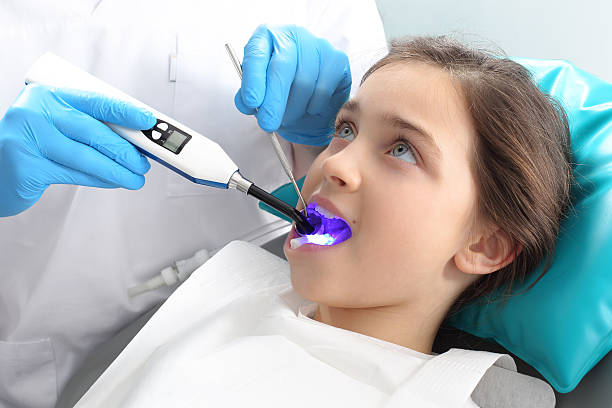
Once applied, the sealant is hardened, often with a small curing light. The dentist will then check the bite and confirm the sealant is secure and comfortable.
Sealants Are Monitored During Future Exams
Dental sealants should be checked at every routine dental exam. Over time, sealants can wear, chip, or partially separate. If a sealant needs repair or reapplication, the dentist can address it during a regular visit before the underlying groove becomes vulnerable again.
Are Fluoride and Dental Sealants Safe?
Both fluoride and dental sealants have long safety records in clinical dental care. Parents who have questions about either treatment are encouraged to discuss them with Dr. Spivak directly.
Fluoride Is Used in Carefully Controlled Dental Amounts
Professional fluoride treatments are applied in amounts appropriate for the patient's age and risk level. The concentration used in a dental office differs from what is found in drinking water or standard toothpaste. Dentists and hygienists follow established guidelines when recommending fluoride for children and adults.
Dental Sealants Stay on the Tooth Surface
Dental sealants are placed on the outer chewing surface of the tooth. They do not involve removing tooth structure and do not penetrate below the enamel. Sealants are monitored over time and can be removed or replaced if needed.
Parents Should Ask Their Dentist About Individual Risk
Every child's situation is different. Parents are encouraged to ask about their child's cavity risk, enamel condition, molar anatomy, diet, home fluoride use, and brushing habits. A conversation with a knowledgeable family dentist near Vienna, VA is the best way to get answers that apply to a specific child, not a general population.
Do Fluoride and Sealants Replace Brushing, Flossing, or Dental Cleanings?
No. Fluoride and dental sealants are protective tools. They do not replace the daily habits and professional care that keep teeth healthy over time.
Brushing and Flossing Still Remove Daily Plaque
Fluoride strengthens enamel and sealants block grooves, but neither treatment physically removes plaque from teeth. Brushing twice daily and flossing once daily are still the foundation of good oral health. Preventive treatments support that foundation. They do not replace it.
Dental Cleanings Remove Tartar That Home Care Cannot
When plaque is not fully removed through brushing and flossing, it hardens into tartar. Tartar cannot be removed at home, no matter how thorough the brushing routine is. Routine dental cleanings and exams in Vienna, VA remove tartar buildup and allow the hygienist and dentist to check for early signs of decay, gum disease, and other concerns.
Dental Exams Help Check Whether Protection Is Working
Dental exams let the dentist monitor sealant condition, enamel health, new cavities, gum health, and home care patterns over time. This is how preventive care stays effective. Without regular exams, small problems can go undetected until they become larger ones.
How SmileWorx Helps Vienna, VA Families Prevent Cavities
SmileWorx is a dental office in Vienna, VA where Dr. Olga Spivak provides preventive family dental care for patients of all ages. The goal is to help patients and families stay ahead of decay before it requires more involved treatment.
Personalized Cavity-Risk Recommendations
Not every patient needs the same preventive treatment. At SmileWorx, Dr. Spivak evaluates cavity risk, tooth anatomy, enamel health, brushing habits, diet, and dental history before making a recommendation. Fluoride, sealants, or a combination of both may be appropriate depending on what the exam reveals.
Preventive Care for Children, Teens, Adults, and Seniors
Family dentistry in Vienna, VA at SmileWorx covers the full range of ages and life stages. Children getting their first molars, teens in active orthodontic treatment, adults managing dry mouth or recession, and seniors with long-term dental restorations all have different preventive needs. SmileWorx addresses each one individually.
Modern Exams Help Detect Problems Earlier
SmileWorx uses digital dental technology and early cavity detection tools to identify concerns at the earliest possible stage. Catching enamel weakening or early groove decay early means simpler treatment and better long-term outcomes. Patients can learn more about SmileWorx's approach to early cavity detection and modern dental exams on the practice website.
FAQs About Fluoride and Dental Sealants in Vienna, VA
What is the difference between fluoride and dental sealants?
Fluoride strengthens enamel and helps teeth resist acid, while dental sealants create a thin protective barrier over the grooves of back teeth. They protect teeth in different ways and are not interchangeable.
Does my child need both fluoride and dental sealants?
Some children benefit from both because fluoride and sealants protect different parts of the tooth. A dentist can recommend the right option based on cavity risk, tooth anatomy, and oral health history.
Are dental sealants only for children?
Dental sealants are most common for children and teens, but some adults with deep grooves in their back teeth and no existing decay may also be candidates. A dentist can evaluate whether sealants make sense for an adult patient.
How long do dental sealants last?
Dental sealants can last for several years, but they should be checked during routine dental exams. Sealants may wear or chip over time and may need repair or reapplication.
How often should fluoride treatments be done?
Fluoride treatment frequency depends on age, cavity risk, enamel health, dry mouth, diet, and dental history. Some patients benefit from fluoride at every routine visit, while others may need it less often.
Do sealants hurt?
No. Dental sealants are applied to the tooth surface and do not require drilling when placed preventively on healthy teeth. Most patients, including young children, tolerate the procedure well.
Do fluoride and sealants replace dental cleanings?
No. Fluoride and sealants help protect teeth, but routine dental cleanings and exams are still needed to remove tartar, check gum health, and detect early decay that preventive treatments alone cannot catch.
Where can I get fluoride or dental sealants in Vienna, VA?
Patients and families in Vienna, VA can ask SmileWorx about fluoride treatments, dental sealants, and preventive family dental care. Dr. Olga Spivak can evaluate your family's needs and recommend the right preventive approach.
Schedule a Preventive Dental Visit in Vienna, VA
Fluoride and dental sealants both help prevent cavities, but they protect teeth in different ways. Fluoride supports enamel strength across the tooth surface. Sealants protect the deep grooves of back teeth where food and bacteria collect. For many patients, the right answer includes elements of both.
If you are not sure whether your child or another family member needs fluoride, sealants, or both, SmileWorx in Vienna, VA can help. Schedule a preventive dental visit with Dr. Olga Spivak, DMD, to receive personalized guidance based on your family's oral health needs, cavity risk, and dental history.